"The State of Academic Unionism." Stanley Aronowitz & Michael Pelias, Dec 9th.
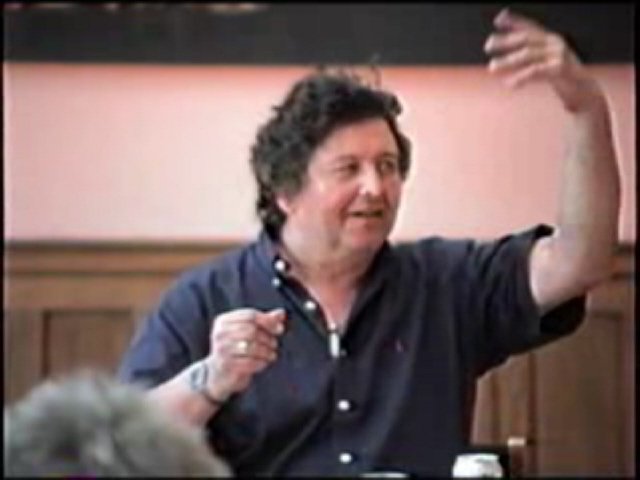
Announcement 11:07 PMStanley Aronowitz, Distinguished professor of Sociology at the CUNY Graduate Center and one of the key figures in Cultural Studies as well as sociology and the labor movement, will be speaking with Michael Pelias (LIU - Philosophy) on
Friday, December 9th, from 5:15-7:30, at Pratt Institute Room: 107/ENG Bldg (formerly 110, the lecture room straight ahead from the stairwell upon entering the Engineering building...)
The lecture/presentation "The State of Academic Unionism" is hosted by Pratt Faculty's union, UFCT Local 1460.
Please RSVP ASAP as seating will be limited. Moreover, students, friends, and guests are welcome, but the organizers will need to know just how many to accommodate.
RSVP to Kye Carbone at kyecarbone@gmail.com
Stanley Aronowitz has taught at the Graduate Center of the City University of New York since 1983, where he is Distinguished Professor of Sociology and Urban Education. He received his B.A. at the New School in 1968 and his Ph.D from the Union Graduate School in 1975. He studies labor, social movements, science and technology, education, social theory and cultural studies and is director of the Center for the Study of Culture, Technology and Work at the Graduate Center.
He is author or editor of twenty-five books including: Against Schooling: For an Education that Matters (2008); Left Turn: Forging a New Political Future (2006); Just Around Corner (2005); How Class Works (2003); The Last Good Job in America (2001); The Knowledge Factory (2000); The Jobless Future (1994, with William DiFazio); and False Promises: The Shaping of American Working Class Consciousness (1973, 1992).
Stanley is founding editor of the journal Social Text and is currently a member of its advisory board. Most recently, he co-founded Situations: Project of the Radical Imagination and serves as co-editor in the journal's editorial collective. He also serves on the advisory board of WorkingUSA: The Journal of Labor and Society, and has sat on the editorial boards of Cultural Critique and Ethnography. He has published more than two hundred articles and reviews in publications such as Harvard Educational Review, Social Policy, The Nation, and The American Journal of Sociology. Prior to coming to the Graduate Center he taught at the University of California–Irvine and Staten Island Community College (now The College of Staten Island). He has been visiting professor or scholar at University of Wisconsin–Madison, the University of Paris VIII, Lund University (Sweden), and Columbia University.
http://www.stanleyaronowitz.org/new/about

Michael Pelias teaches Philosophy at Long Island University, Brooklyn Campus. His courses include the ancients, Machiavelli to Nietzsche, Philosophy and Film, Philosophy of Money, and Continental Philosophy since Hegel. He is the co-mananging editor of Situations: Project of the Radical Imagination, a member of the 15th Street Manifesto Group and a member of the Long Island University Faculty Federation's negotiating committee.
REPOST from the New York Academy of Sciences announcement of a four part series on conservation and urban life coming this January.
DISCOURSES ON NATURE AND SOCIETY
In this four-part series, the New York Academy of Sciences and the Nature Conservancy explore the relationship between conservation and our increasingly urban existence.For more information about the events listed here and to register with discounts, visit www.nyas.org/NatureAndSociety.
Thursday, January 12, 2012 | 6:30 PM - 8:30 PM
Energy for the Next 20 Years: Protecting the Environment and Meeting Our Demands
How can Earth possibly meet its growing energy demands without destroying the environment? Experts on wind, nuclear, hydropower and other energy forms debate the most promising paths forward. The first installment of our four-part series Discourses on Nature and Society.
Thursday, February 23, 2012 | 6:30 PM - 8:30 PM
Creating the Next Conservation Movement—Or Do We Even Need One?
How can we build a new U.S. conservation and environmental movement to meet the challenges of the new century...or is the desire to mainstream environmentalism just a symptom of the problem? The second installment of our four-part series Discourses on Nature and Society.
Nature and the City: What Good is Urban Conservation?
There's a new energy across the United States about recapturing nature in cities, but can these efforts rebuild biodiversity? Leading scientists, authors, and urban conservationists discuss the science behind and promise for today’s urban conservation efforts. The third installment of our four-part series Discourses on Nature and Society.
Beyond Ideology: How Should We Feed Ourselves if We Care About Nature?
Faced with ever-increasing population and ever-decreasing food systems, five scientists discuss the challenges and potential solutions that could feed the people and protect nature. The fourth installment of our four-part series Discourses on Nature and Society.
REGISTRATION:
SPECIAL NONMEMBER PRICING: Register for the Entire Series and Save!
FREE for all Academy Members!
SERIES PRESENTED BY:
 |
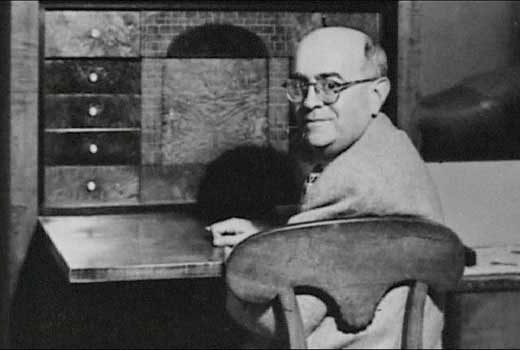
| Theodor Adorno, Self-portrait. |
Theodor Adorno on Theory and Practice.
From Problems of Moral Philosophy. Stanford University Press,1995: 4-5. [Lectures: May 7, 1963 - July 23, 1963.]
"Ladies and Gentlemen, I urge you therefore to exercise a certain patience with respect to the relations between theory and practice. Such a request may be justified because in a situation like the present - one about which I do not entertain the slightest illusion, and nor would I wish to encourage any illusion in you - whether it will be possible ever again to achieve a valid for of practice may well depend on not demanding that every idea should immediately produce its own legitimizing document explaining its own practical use.
The situation may well demand instead that we resist the call of practicality with all our might in order ruthlessly to follow through an idea and its logical implications so as to see where it may lead. I would even say that this ruthlessness, the power of resistance that is inherent in the idea itself and that prevents it from letting itself be directly manipulated for any instrumental purposes whatsoever, this theoretical ruthlessness contains - if you will allow this paradox -- a practical element within it. Today, practice - and I do not hesitate to express this in an extreme way - has made great inroads into theory, in other words, into the realm of new thought in which right behavior can be reformulated. This idea is not as prardoxical and irritating as it may sound, for in the final analysis thinking is itself a form of behavior. In its origins thinking is no more than a form in which we have attempted to master our environment and come to terms with it - testing reality is the name given by analytical psychology to the function of the ego and of thought - and it is perfectly possible that in certain situations practice will be referred back to theory far more frequently than at other times and in other situations. At any rate, it does no harm to air this question.
It is no accident that the celebrated unity of theory and practice implied by Marxian theory and then developed above all by Lenin should have finally degenerated in [Stalinist] dialectical materialism to a kind of blind dogma whose sole function is to eliminate theoretical thinking altogether. This provides an object lesson in the transformation of practicism into irrationalism, and hence, too, for the transformation of the practicism into a repressive and oppressive practice. That alone might well be a sufficient reason to give us pause and not be in such haste to rely on the famous unity of theory and practice in the belief that it is guaranteed and that it holds good for every time and place. For otherwise you will find yourself in the position of what Americans call a joiner, that is to say a man who always has to join it, who has to have a cause for which he can fight. Such a person is driven by his sheer enthusiasm for the idea that something or other must be done and some movement has to be joined about which he is deluded enough to believe that it will bring him a kind of hostility towards mind that necessarily negates a genuine unity of theory and practice."